




CPEC 2.0: Pakistan's Roadmap for Industrialization, Innovation, and Sustainable Economic Growth
Introduction
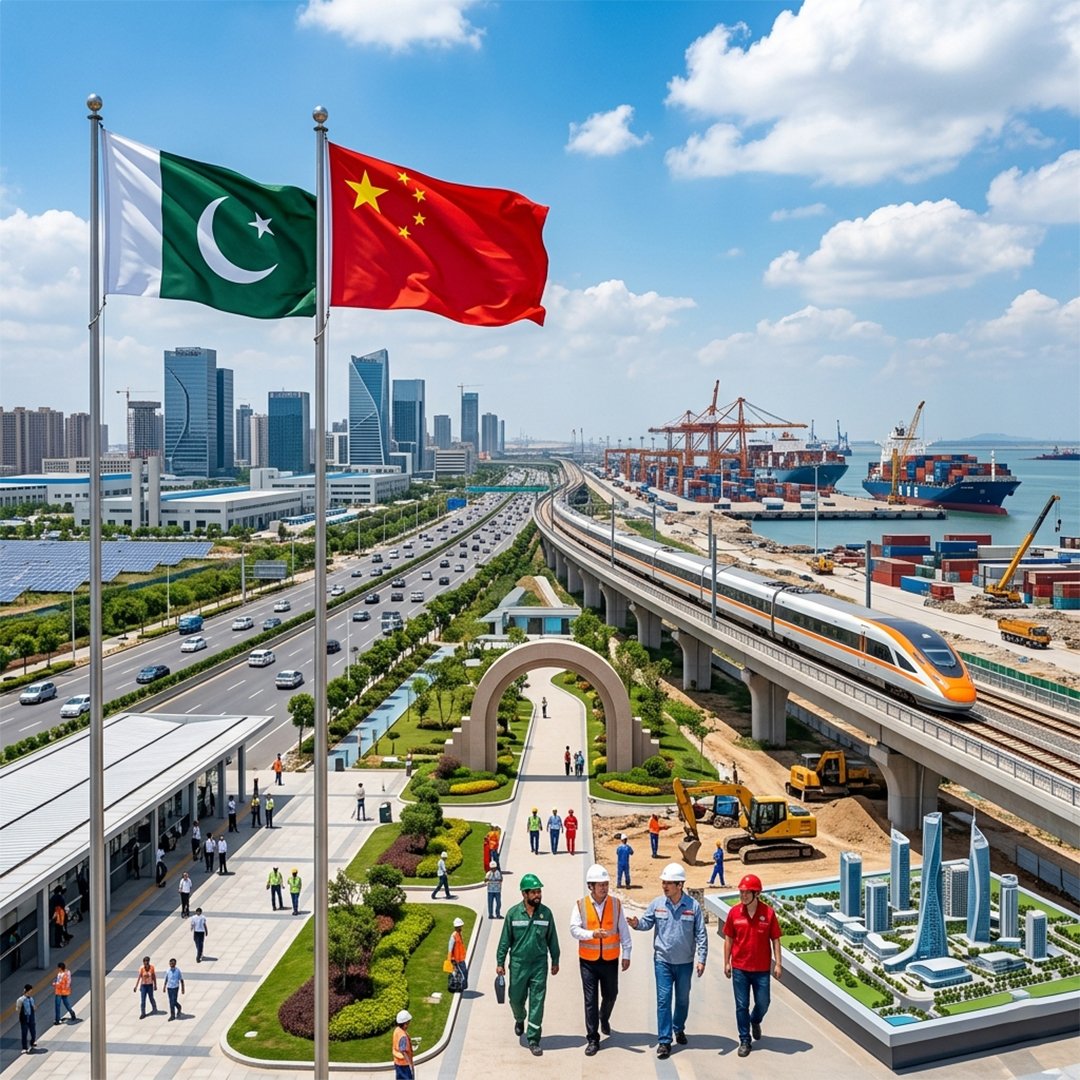
The China-Pakistan Economic Corridor (CPEC) has emerged as one of the most significant economic cooperation initiatives in South Asia. Launched in 2015 as the flagship project of China's Belt and Road Initiative (BRI), CPEC has fundamentally altered Pakistan's development landscape through investments in energy, transportation, and infrastructure. Over the past decade, billions of dollars have been invested in roads, highways, power generation projects, and the development of Gwadar Port, helping Pakistan address chronic energy shortages and improve national connectivity.
As the first phase of CPEC focused largely on building the foundations of economic growth, the second phase represents a strategic shift toward industrialization, export-led growth, technological advancement, agricultural modernization, and socioeconomic development. The success of CPEC Phase II could determine whether Pakistan transforms itself into a regional economic hub capable of competing in global markets.
Evolution of CPEC: From Infrastructure to Economic Transformation
The first phase of CPEC concentrated on addressing Pakistan's immediate infrastructure needs. Major projects included the construction of motorways, modernization of transportation networks, development of power plants, and expansion of Gwadar Port. These investments were intended to eliminate bottlenecks that had long constrained economic growth.
While infrastructure development was necessary, sustainable growth requires productive industries, technological innovation, skilled labor, and export competitiveness. Recognizing this reality, Pakistan and China jointly designed Phase II to focus on sectors that directly contribute to long-term economic development.
Unlike Phase I, which primarily involved large-scale physical infrastructure projects, Phase II emphasizes economic productivity, industrial cooperation, business development, and human capital enhancement.
Special Economic Zones: The Core of Phase II
One of the most important pillars of CPEC Phase II is the establishment and operationalization of Special Economic Zones (SEZs). These industrial zones are designed to attract domestic and foreign investment by offering modern infrastructure, tax incentives, simplified regulations, and access to transportation networks.
SEZs are expected to become engines of industrial growth by providing dedicated areas for manufacturing and value-added production. Several priority SEZs have been identified across Pakistan to ensure balanced regional development.
The objectives of SEZs include:
- Promoting industrialization and manufacturing.
- Increasing foreign direct investment.
- Enhancing export capacity.
- Creating employment opportunities.
- Facilitating technology transfer.
- Developing industrial clusters.
Chinese companies seeking to relocate labor-intensive industries due to rising production costs in China may view Pakistan as an attractive destination. This presents a unique opportunity for Pakistan to integrate into global supply chains.
If managed effectively, SEZs could significantly increase industrial output in sectors such as textiles, engineering, electronics, pharmaceuticals, food processing, chemicals, and automotive manufacturing.
Industrial Cooperation and Manufacturing Expansion
Industrial development is at the heart of CPEC Phase II. Pakistan's economy has historically relied heavily on agriculture and low-value manufacturing. To achieve sustainable growth, the country must diversify its industrial base and move toward higher-value production.
China's industrial experience offers valuable lessons and opportunities for Pakistan. Through joint ventures, partnerships, and investment agreements, Pakistani industries can gain access to:
- Advanced manufacturing technologies.
- Modern production techniques.
- Industrial management expertise.
- International marketing networks.
- Research and development capabilities.
Industrial cooperation under CPEC Phase II aims to transform Pakistan from a consumption-driven economy into a production-oriented economy capable of competing in international markets.
The development of manufacturing industries is expected to increase exports, reduce dependence on imports, and improve Pakistan's trade balance.
Agricultural Modernization and Food Security
Agriculture contributes significantly to Pakistan's GDP and employs a large percentage of the workforce. However, the sector faces challenges including low productivity, outdated farming methods, water scarcity, inadequate storage facilities, and limited technological adoption.
CPEC Phase II places strong emphasis on agricultural cooperation between Pakistan and China. Key areas of collaboration include:
Technology Transfer
Chinese expertise in precision farming, mechanization, biotechnology, and irrigation can help improve agricultural productivity across Pakistan.
Modern Irrigation Systems
Efficient water management technologies can help address Pakistan's growing water challenges and improve crop yields.
Seed Development
Research collaboration can lead to the development of high-yield and climate-resistant crop varieties.
Livestock Development
Cooperation in livestock breeding, dairy production, and veterinary services can strengthen Pakistan's livestock sector.
Food Processing
Investments in food processing industries can increase value addition and reduce post-harvest losses.
Agricultural modernization not only improves food security but also increases export potential and rural incomes.
Development of Gwadar: The Gateway to Regional Connectivity
Gwadar remains one of the most strategically important components of CPEC. Located near the Arabian Sea and close to key international shipping routes, Gwadar has the potential to become a major commercial and logistics hub.
Phase II seeks to accelerate Gwadar's transformation through investments in:
- Urban development.
- Water supply systems.
- Electricity infrastructure.
- Healthcare facilities.
- Educational institutions.
- Industrial zones.
- Logistics and warehousing facilities.
The long-term vision is to develop Gwadar into a modern port city capable of facilitating trade between China, Pakistan, Central Asia, the Middle East, and Africa.
As regional connectivity improves, Gwadar could emerge as a major center for maritime commerce and international investment.
Information Technology and Digital Economy
A notable feature of CPEC Phase II is its focus on technological collaboration. In an increasingly digital world, economic competitiveness depends on innovation and technological capacity.
Areas of cooperation include:
- Information technology infrastructure.
- E-commerce platforms.
- Artificial intelligence.
- Cloud computing.
- Telecommunications.
- Smart city development.
- Digital governance systems.
Pakistan's growing youth population presents a significant opportunity to develop a technology-driven economy. Chinese investment and expertise can help strengthen Pakistan's digital ecosystem and create new opportunities for entrepreneurs and startups.
Technology parks, innovation centers, and research collaborations are expected to play an important role in this transformation.
Human Capital Development and Employment Generation
Economic development cannot be sustained without a skilled workforce. Therefore, CPEC Phase II places significant emphasis on education, vocational training, and human resource development.
Programs are being designed to:
- Train workers in industrial skills.
- Improve technical education.
- Enhance engineering capabilities.
- Promote entrepreneurship.
- Support research and innovation.
Employment generation remains one of the most anticipated outcomes of Phase II. As industries expand and new businesses emerge, job opportunities are expected to increase in manufacturing, logistics, agriculture, construction, technology, and services sectors.
This could help address Pakistan's youth unemployment challenge while improving household incomes and living standards.
Energy Cooperation and Green Development
While Phase I focused heavily on energy generation, Phase II aims to improve energy sustainability and efficiency.
Future cooperation may include:
- Renewable energy projects.
- Solar power development.
- Wind energy investments.
- Hydropower projects.
- Energy efficiency initiatives.
- Green industrial practices.
The transition toward cleaner energy sources aligns with global sustainability goals and can help Pakistan reduce its dependence on imported fossil fuels.
Regional Trade and Economic Integration
One of the broader objectives of CPEC Phase II is to position Pakistan as a regional trade and transit hub.
Pakistan's geographic location provides a natural bridge connecting:
- China.
- Central Asia.
- South Asia.
- The Middle East.
- Africa.
Improved infrastructure, modern ports, and efficient logistics networks can facilitate regional trade and strengthen economic integration. Increased connectivity may also enhance Pakistan's geopolitical significance and attract international investment.
Challenges Facing CPEC Phase II
Despite its enormous potential, several challenges must be addressed to ensure success.
Security Concerns
The protection of infrastructure projects, investors, and workers remains a critical priority.
Policy Consistency
Long-term projects require stable policies and political continuity.
Regulatory Reforms
Improving the ease of doing business is essential for attracting investors.
Debt and Financial Management
Projects must be financially sustainable and economically viable.
Institutional Capacity
Government institutions need strong coordination mechanisms to ensure timely implementation.
Local Participation
Communities must be included in development efforts to maximize socioeconomic benefits.
Addressing these challenges will be essential for realizing the full potential of Phase II.
Future Outlook
CPEC Phase II represents a defining opportunity for Pakistan's economic future. By shifting the focus from infrastructure construction to industrial growth, innovation, agriculture, and human development, the initiative seeks to create a more diversified and resilient economy.
If implemented successfully, Phase II could:
- Increase industrial production.
- Expand exports.
- Generate millions of jobs.
- Strengthen technological capabilities.
- Improve food security.
- Enhance regional connectivity.
- Attract foreign investment.
- Accelerate economic growth.
The coming decade will be crucial in determining whether Pakistan can fully capitalize on this historic partnership.
Conclusion
CPEC Phase II is more than an infrastructure initiative; it is a comprehensive development strategy aimed at transforming Pakistan into a modern, industrialized, and globally connected economy. Through industrial cooperation, agricultural modernization, technological innovation, human capital development, and regional integration, the second phase has the potential to unlock unprecedented opportunities for economic growth and national prosperity.
The success of this ambitious vision will depend on effective implementation, policy continuity, institutional efficiency, and the ability to ensure that the benefits of development reach all segments of society. If these objectives are achieved, CPEC Phase II may become one of the most transformative chapters in Pakistan's economic history.

Ovais Ali Khokhar, as Founder and CEO of House of Elaan & Ovaisco Group, has revolutionized the real estate industry with innovative strategies that blend marketing, investment, legal services, and creativity. His efforts in international relations have led to significant global partnerships. He is deeply invested in youth empowerment, aiming to nurture the next generation of leaders and drive forward a resilient and vibrant future. His work is characterized by a strong commitment to collaboration, innovation, and a vision for a globally connected, sustainable future.
Ovais Ali Khokhar
President Elaan Research Center
Prev Article