




E-Commerce in Pakistan: A Detailed Analysis of Its Present and Future
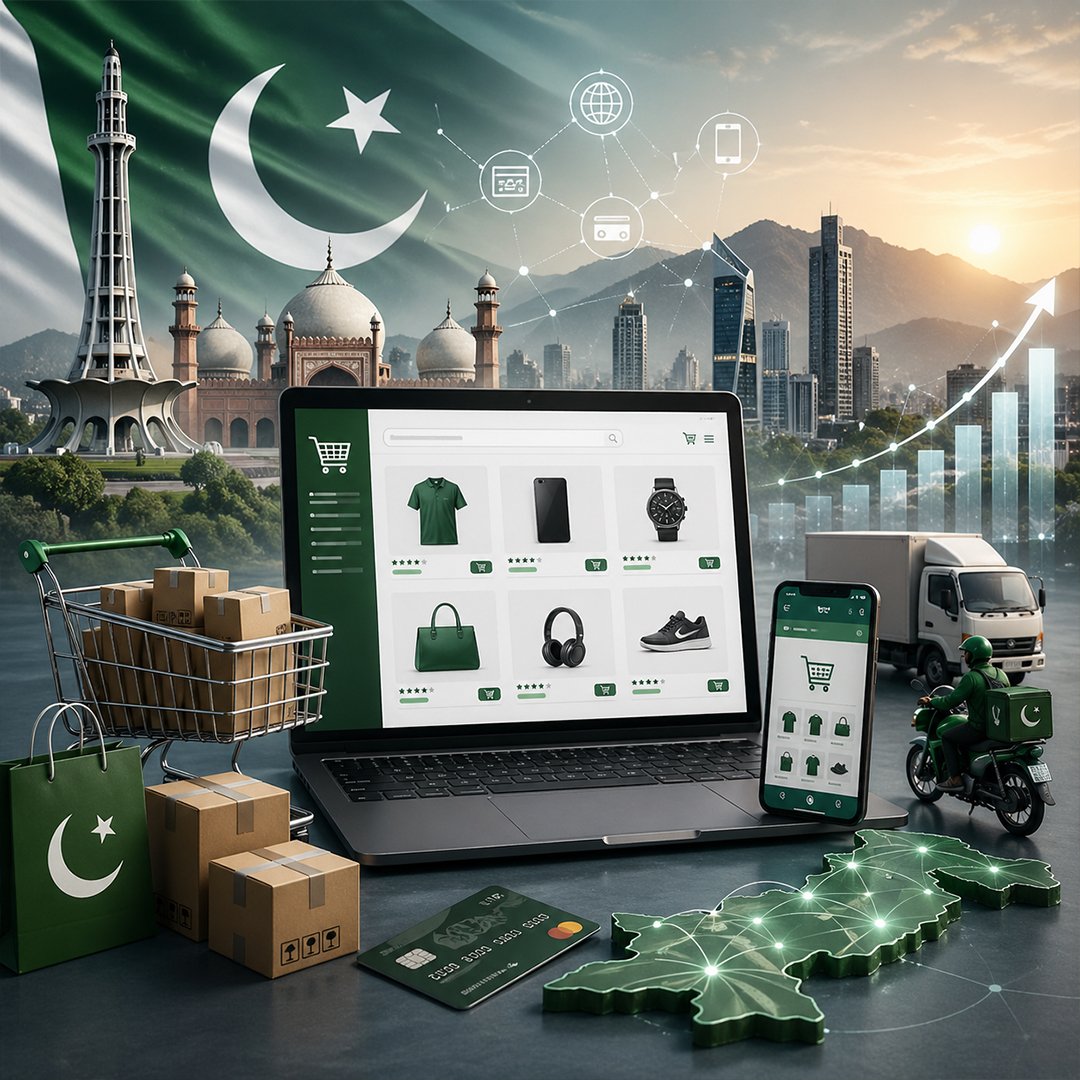
In Pakistan E-commerce has grown from a limited online retail experiment to rapidly growing and dynamic sector of the economy. During last decade the country has seen a digital transformation due to expanding internet access, affordable mobile phones and youth population willing to embrace new and innovative technologies. The market has seen a remarkable rise in 2024 to $5.5 billion, with a projected compound annual growth rate (CAGR) of 17% through 2027. However, the industry is still facing the structural and behavioural challenges but its trajectory shows that in future e-commerce will play a vital role in growth of Pakistan’s economy.
1. Evolution of E-Commerce in Pakistan
In Pakistan the E-commerce began in early 2000s, but at slow pace due to challenges like limited internet and lacking consumer trust. In mid-2010 the real shift began when 3G and 4G internet services were introduced, resulting in the improvement of connectivity across nation. This shift makes businesses to build digital storefronts and permitted consumer to easily access online marketplaces.
In the beginning most of the online e-commerce platforms only focused on urban area like Karachi, Islamabad and Lahore etc. As the improvement in connectivity take place, gradually e-commerce expanded to smaller rural and semi-urban areas. The Social media platforms also became the informal forefront marketplaces, enabling small home-based entrepreneurs to sell their products without heavy investment.
2. Current Structure of the E-Commerce Ecosystem
Pakistan’s e-commerce ecosystem is diverse and consists of multiple layers:
a. Online Marketplaces
To connect buyers and sellers, large platforms are acting as intermediaries. By providing logistics support, payment integration, and customer service systems, these platforms are making it easier for businesses to operate online.
b. Independent E-Stores
Websites and mobile applications have been developed by many established brands and retailers on their own to sell directly to consumers. This allows them to retain their brand identity and customer relationships.
c. Social Commerce
In Pakistan a significant portion of e-commerce activity occurs through social media platforms like Instagram, Facebook, and WhatsApp. Sellers promote their products, interact with customers, and finalize orders through direct messaging.
d. Service-Based E-Commerce
E-commerce didn’t only mean the sale and purchase of physical goods, it also includes services like online food delivery, freelancing, ride hailing and other digital content subscriptions in broader context of e-commerce landscape.
3. Payment Systems and Financial Inclusion
Cash on delivery is one of the main characteristics dominating Pakistan’s e-commerce market. Where COD help in building trust among customers, it also poses several challenges like, high return rates for businesses, increase in operational cost and risk of cash handling.
However, with the passage of time digital payments are gaining acceptance gradually. Branchless banking, QR code payments and mobiles wallets solution are also expanding financial inclusion. Further, initiatives at governmental level and fintech innovation are now encouraging people to adopt cashless transactions.
The growth of digital payments is vital because it directly impact the efficiency and scalability of e-commerce operation. As the adoption of online payment increases businesses can streamline process and reducing the cost.
4. Logistics and Supply Chain Development
In e-commerce Logistics is known as backbone, and Pakistan has made notable progress in this area. Due to high demand courier companies have expanded their networks, enabling deliveries to a wider range of locations. Warehousing and fulfillment centers are also becoming more sophisticated.
Despite improvements, several issues still persist in this area, like Delivery delays especially in remote and rural areas, High shipping costs, Inefficient reverse logistics (returns and exchanges) and Limited cold-chain infrastructure for perishable goods.
Future growth of e-commerce will heavily depend on investments in infrastructure, including smart warehouses, automated sorting systems, and last-mile delivery innovations.
5. Consumer Behavior and Trust Issues
Consumer trust remains one of the biggest challenges for e-commerce in Pakistan. Common concerns include:
- Receiving products that differ from online descriptions
- Lack of reliable return and refund policies
- Fear of online fraud
Because of these issues, many customers prefer COD and are hesitant to make prepaid purchases. Building trust requires:
- Transparent product listings
- Customer reviews and ratings
- Easy return policies
- Strong consumer protection laws
As businesses improve service quality and accountability, consumer confidence is expected to grow.
6. Role of Small and Medium Enterprises (SMEs)
E-commerce has created new opportunities for SMEs and entrepreneurs. With minimal investment, individuals can start online businesses and reach customers nationwide. This is particularly significant in a country where access to traditional retail infrastructure can be limited.
Women entrepreneurs, in particular, have benefited from e-commerce platforms and social media, enabling them to run businesses from home. This has contributed to economic inclusion and empowerment.
7. Government Policies and Regulatory Environment
The government of Pakistan has recognized the importance of e-commerce and introduced policies aimed at supporting the sector. These include:
- E-commerce policy frameworks like e-commerce policy 2019.
- Digital payment promotion like Raast to ease transactions.
- Support for startups and IT exports
However, regulatory challenges remain, such as:
- Taxation complexities
- Lack of standardized rules for online businesses
- Weak enforcement of consumer protection laws
A clear and consistent regulatory framework will be essential for attracting investment and ensuring sustainable growth.
8. Emerging Trends Shaping the Future
a. Growth of Digital Payments
As fintech solutions become more accessible, digital transactions will increase. This will reduce reliance on COD and improve efficiency.
b. Expansion into Rural Areas
With improving internet coverage, e-commerce will reach previously underserved regions, unlocking new markets.
c. Mobile Commerce (M-Commerce)
Most users in Pakistan access the internet via smartphones. Businesses will increasingly focus on mobile-friendly platforms and apps.
d. Artificial Intelligence and Data Analytics
Companies will use AI to analyze customer behavior, personalize recommendations, and optimize supply chains.
e. Cross-Border E-Commerce
Pakistani businesses will have more opportunities to sell products internationally through global platforms, boosting exports.
f. Quick Commerce and On-Demand Services
Faster delivery models, including same-day and instant delivery, are likely to emerge in major cities.
9. Challenges Ahead
Despite its potential, the future of e-commerce in Pakistan depends on addressing several critical challenges:
- Improving digital literacy
- Strengthening cybersecurity
- Enhancing logistics infrastructure
- Building consumer trust
- Expanding financial inclusion
Failure to address these issues could slow down growth and limit the sector’s impact.
10. Conclusion
In Pakistan e-commerce stands at transformative stage. The combination of technological advancement, increasing digital awareness and demographic advantages provides a strong foundation for growth.
On the other hand, several challenges like lack of trust, limitation in payments, inefficiencies in logistics slowdown the growth of e-ecommerce. However, strong policies and improved infrastructural network are gradually addressing these hurdles.
In the coming years, e-commerce is expected to become a major contributor to Pakistan’s economy. It will not only reshape retail and services but also create employment opportunities, empower entrepreneurs, and connect Pakistan to the global digital marketplace. With sustained efforts from the government, private sector, and consumers, the future of e-commerce in Pakistan holds immense promise.

Mr. Obaid Ayub is a skilled professional with specialization in Finance and Operations. Demonstrating a proven track record, He possess a unique combination of skills tailored for the dynamic realms of finance, real estate, and marketing. He has successfully optimized business processes and implemented strategic financial initiatives, showcasing his ability to deliver tangible results. His expertise lies in developing and executing robust financial strategies aligned with organizational objectives, ensuring sustainable growth and profitability. He possess significant expertise in budgeting, forecasting, and financial analysis, contributing to the facilitation of well-informed decision-making.