



Pakistan's Role as a Mediator in the Iran-US-Israel Ceasefire: A New Diplomatic Era
Introduction
In April 2026, global attention shifted toward South Asia as Pakistan stepped forward as an important diplomatic actor in efforts to mediate a ceasefire between Iran, the United States, and Israel. As military tensions escalated and fears of a wider Middle East conflict grew, Pakistan’s involvement signaled a notable evolution in its foreign policy and international role. This blog examines Pakistan’s mediation initiatives, highlights its strategic significance, and discusses the challenges it faces in maintaining peace within an increasingly volatile region.
Background: The Iran–US–Israel Conflict
On February 28, 2026, the United States and Israel carried out coordinated airstrikes on Iran, marking a sharp escalation in regional tensions. In the weeks that followed, the conflict deepened through continued airstrikes, proxy confrontations, and growing instability across the region. The crisis posed a serious threat to global oil supplies especially around the Strait of Hormuz and fueled widespread fears of a broader war.
After nearly six weeks of sustained escalation, a temporary ceasefire was announced on request of Pakistan, on April 7, 2026, creating a brief but crucial opportunity for diplomacy and renewed negotiations.
Role of Pakistan in mediating ceasefire
After weeks of intense conflict involving Iran, the United States, and Israel, tensions escalated sharply when Donald J. Trump warned of severe and potentially devastating attacks on Iran. His repeated threats of large-scale military action and destruction of critical infrastructure heightened global anxiety, as the situation appeared to be moving toward a wider war. As a result, the international community was gripped by shock and fear, with many concerned that the conflict could escalate into a broader global confrontation resembling another world war.
During this tense situation Pakistan has emerged as a key mediator between Iran–US–Israel conflict, brokering a fragile, temporary ceasefire in the Middle East. By acting as a neutral conduit for backchannel talks and leveraging strong relationships with Washington, Tehran, and Beijing, Pakistan facilitated a, now paused, conflict, marking a major, though heavily scrutinized, diplomatic victory.
Key Aspects of Pakistan's Role
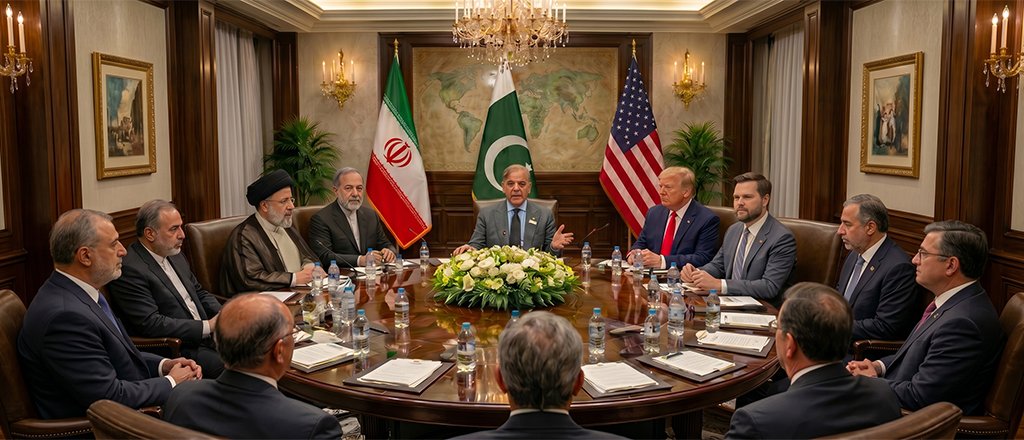
Pakistan’s leadership, including Prime Minister Shehbaz Sharif and Field Marshal Asim Munir, urged both sides to agree to a ceasefire and resolve their differences through dialogue at the negotiating table. In response, U.S. President Donald J. Trump accepted the appeal and paused military actions against Iran, while Iranian authorities also welcomed Pakistan’s call for de-escalation.
The so-called “Islamabad Talks” reflected Pakistan’s proactive diplomatic role, as it proposed and helped facilitate a two-phase ceasefire aimed at preventing further military escalation. Leveraging its strategic position and maintaining close relations with both Washington and Tehran, Pakistan’s leadership kept open and trusted communication channels with both sides, enabling constructive engagement during a critical period.
Backchannel Diplomacy:
Islamabad played a central role in conveying critical information and negotiating terms, with reports suggesting they were essential in holding the fragile truce together, despite some operational issues, such as reported on public communications.
International Recognition:
Recognition by the United States and Iran
Pakistan’s most significant international recognition came directly from the two principal parties to the conflict the United States and Iran. Both countries accepted Pakistan as a credible intermediary and participated in talks that were facilitated through Pakistani diplomatic channels, which itself reflects a high level of trust. Iran openly appreciated Pakistan’s efforts in reducing tensions and helping initiate dialogue, while the United States demonstrated its confidence by engaging in negotiations connected to Islamabad’s mediation efforts. This type of acknowledgment is particularly important because recognition from the actual conflict parties carries more weight than external praise. It shows that Pakistan was not merely commenting on the situation but actively involved in diplomacy that both sides considered useful. As a result, Pakistan emerged as a reliable communication bridge, helping to open channels that contributed to the temporary ceasefire.
Recognition in international media and diplomacy
At the global level, Pakistan’s role was widely highlighted in international media and diplomatic discussions, further strengthening its image as an emerging mediator. Major international outlets and policy analysts described Pakistan as a “key mediator” or an “important diplomatic facilitator” in the US–Iran tensions. This coverage emphasized how Pakistan helped create conditions suitable for dialogue, even if it did not single-handedly secure a final agreement. In diplomatic circles, Pakistan’s involvement was seen as a sign of its growing relevance in regional and global politics, especially given its strategic ties with both Western and Middle Eastern countries. The fact that its role was publicly acknowledged rather than kept behind closed doors also added to its credibility. Overall, this recognition enhanced Pakistan’s international standing, portraying it as a constructive actor capable of contributing to conflict resolution, even though its role remained part of a broader, multi-country mediation effort.
Impact on Regional Diplomacy
This intervention represents a notable shift in regional dynamics, briefly elevating Pakistan’s diplomatic role from a peripheral position to the center of global crisis management efforts. It highlights Pakistan’s increasing visibility and involvement in high-level international diplomacy during a critical period. The development has momentarily strengthened its image as an active contributor to peacebuilding initiatives. However, the durability of this emerging “new era” remains uncertain given the fragile nature of the situation. The region continues to experience instability and shifting political tensions. There is also considerable skepticism among observers regarding the long-term sustainability of the truce. Many analysts believe that underlying issues remain unresolved. As a result, the future effectiveness of this diplomatic shift will depend on continued stability and sustained engagement.
Why Pakistan Was Chosen as Mediator
Pakistan’s emergence as a mediator was not accidental but the result of multiple strategic, geographic, and diplomatic factors that positioned it uniquely for this role.
Strategic Neutrality
Pakistan’s ability to maintain working and relatively balanced relations with both Iran and the United States played a central role in its selection as a mediator. Unlike many regional actors that are firmly aligned with one side, Pakistan has carefully managed its foreign policy to avoid direct confrontation with either party. Its longstanding cooperation with the United States in security and defense matters, alongside its neighborly ties and cultural-religious connections with Iran, allowed it to be perceived as a credible and less biased intermediary. This relative neutrality made both sides more willing to trust Pakistan as a channel for communication and negotiation during a highly sensitive conflict.
Geopolitical Significance
Pakistan’s geographic location significantly enhanced its importance in the crisis. Sharing a long border with Iran, Pakistan is directly affected by any instability in the region, including refugee flows, cross-border security threats, and economic disruptions. Moreover, its proximity to key strategic routes, particularly near the Strait of Hormuz, gives it a vested interest in preventing escalation that could disrupt global oil supplies and trade. This geographic reality meant that Pakistan was not only a convenient mediator but also a stakeholder with genuine incentives to promote peace and stability.
Diplomatic Track Record
Pakistan’s history of engaging in quiet diplomacy and facilitating dialogue added to its credibility as a mediator. Over the years, it has participated in backchannel negotiations and played supportive roles in easing tensions in various regional and global contexts, including during the Cold War. This experience has helped develop institutional knowledge, diplomatic networks, and negotiation skills that are crucial in conflict resolution. As a result, Pakistan was seen as capable of managing sensitive discussions discreetly while maintaining communication between opposing sides.
Strong Global Partnerships
Pakistan’s relationships with major global powers, particularly China, further strengthened its mediation role. Support from influential allies enhanced Pakistan’s diplomatic leverage and provided additional confidence to the involved parties that the mediation effort had broader international backing. At the same time, Pakistan’s engagement with other regional actors and international organizations allowed it to operate within a wider diplomatic framework. This network of alliances increased its credibility and influence, enabling it to play a more effective role in facilitating dialogue and encouraging de-escalation.
Achievements of Pakistan’s Mediation
Pakistan’s diplomatic intervention led to several important outcomes, most notably the establishment of a temporary ceasefire that helped halt ongoing hostilities after weeks of escalating tensions. This pause in conflict reduced the immediate risk of a wider regional war, eased global concerns about further escalation, and created a critical opportunity for diplomacy at a highly volatile moment. It also helped open limited but meaningful channels of communication between the involved parties for continued dialogue.
In addition to stabilizing the immediate situation, Pakistan’s role contributed to its growing recognition as an emerging diplomatic actor on the global stage. By facilitating engagement between conflicting sides, it strengthened perceptions of Pakistan as a country capable of supporting conflict resolution and regional stability. Analysts have described this as one of Pakistan’s more significant diplomatic achievements in recent years, highlighting its potential influence in future mediation efforts.
Global Impact of Pakistan’s Role
Pakistan’s involvement in the crisis has had significant broader implications for its international position. It has contributed to an elevation of Pakistan’s global diplomatic status and visibility. In the short term, it also helped support stability in global oil markets by reducing immediate conflict risks. The situation has influenced shifting diplomatic dynamics in the Middle East, where new patterns of engagement are emerging. Pakistan’s role has further increased its relevance in international negotiations and conflict resolution efforts. This development highlights its growing capacity to engage in high-level diplomacy. For the first time in decades, Pakistan has placed itself at the center of a major global conflict resolution process.
Future Outlook
Pakistan’s continued involvement in the mediation process will largely depend on its ability to maintain a neutral stance, ensuring it remains acceptable to all conflicting parties. It must also continue building and sustaining trust between the sides through consistent and credible diplomatic engagement. In addition, effective collaboration with major global powers will be essential to strengthen its influence and support long-term conflict resolution efforts.
Conclusion
Pakistan’s mediation in the Iran–US–Israel conflict marks a significant turning point in its foreign policy trajectory. It reflects Pakistan’s transition from a primarily regional actor to a more visible participant in global diplomatic efforts. By engaging in high-level mediation, Pakistan has demonstrated its potential to contribute meaningfully to international peace and conflict resolution. This development has enhanced its diplomatic profile and expanded its global relevance. However, maintaining this position will require consistent and careful diplomacy in a highly complex geopolitical environment. Pakistan must continue balancing its relationships with key global and regional powers. Ultimately, its long-term influence will depend on sustained engagement and credible diplomatic performance.
Ovais Ali Khokhar, as Founder and CEO of House of Elaan & Ovaisco Group, has revolutionized the real estate industry with innovative strategies that blend marketing, investment, legal services, and creativity. His efforts in international relations have led to significant global partnerships. He is deeply invested in youth empowerment, aiming to nurture the next generation of leaders and drive forward a resilient and vibrant future. His work is characterized by a strong commitment to collaboration, innovation, and a vision for a globally connected, sustainable future.
Ovais Ali Khokhar
President Elaan Research Center