



Pakistan's Rich Heritage and Tourism Potential: A Gateway to Trillion-Rupee Growth
Introduction
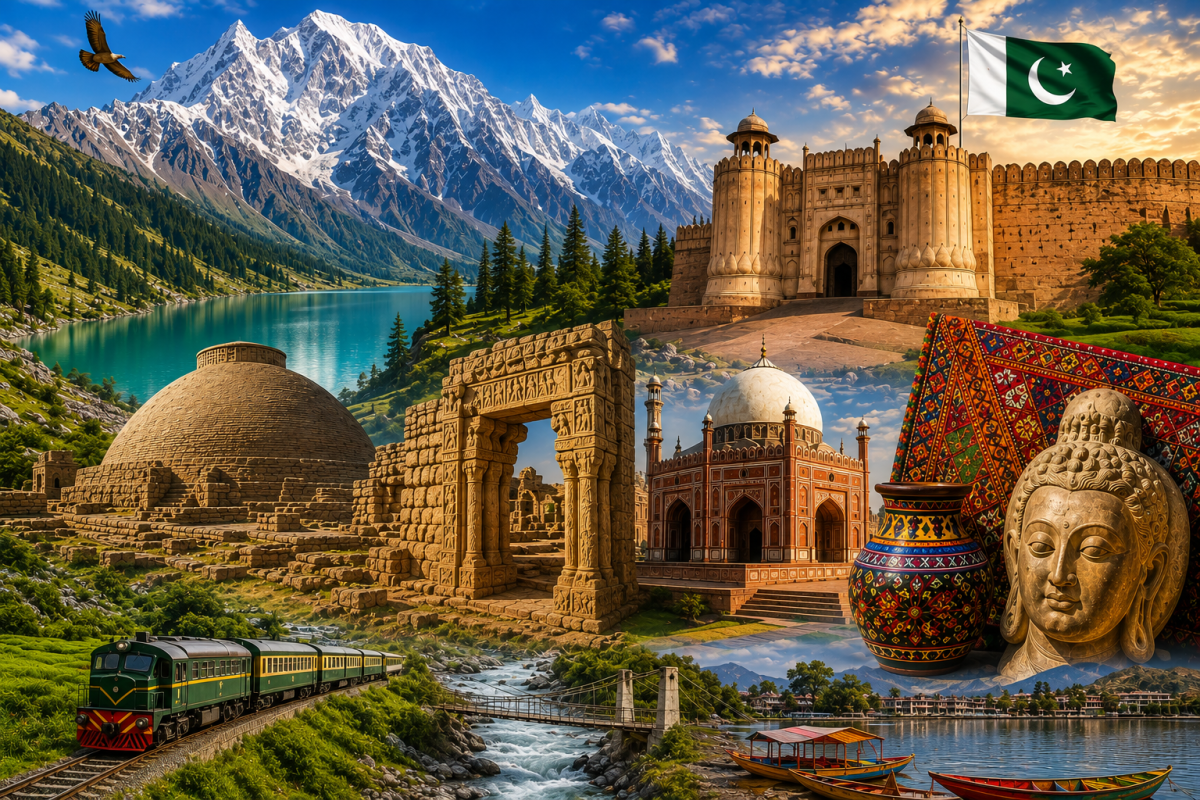
Pakistan is a country endowed with extraordinary natural beauty, ancient civilizations, diverse cultures, and rich religious heritage. From the towering peaks of the Karakoram and Himalayas to the golden deserts of Cholistan, from the archaeological treasures of Mohenjo-daro and Taxila to the serene valleys of Hunza, Swat, and Neelum, Pakistan possesses immense tourism potential. Despite decades of underinvestment and security concerns, the country has witnessed a significant revival in tourism, supported by improved infrastructure, visa reforms, and government initiatives.
With a population of approximately 259 million in 2026, Pakistan is the world's fifth-most populous country, offering a large domestic tourism market alongside growing international interest.
Pakistan's Tourism Assets
Pakistan's tourism industry is built upon following major pillars:
1. Natural Tourism
Pakistan offers some of the world's most spectacular landscapes.
Major attractions include:
- Hunza Valley
- Skardu
- Fairy Meadows
- Naran-Kaghan
- Swat Valley
- Kumrat Valley
- Neelum Valley
- Deosai National Park
- Hingol National Park
Pakistan is home to five of the world's fourteen peaks above 8,000 metres, including K2 (8,611 metres), the world's second-highest mountain, making it one of the premier destinations for mountaineering and adventure tourism.
2. Cultural Heritage
Pakistan possesses one of South Asia's richest cultural histories.
Important heritage sites include:
- Mohenjo-daro
- Taxila
- Harappa
- Lahore Fort
- Shalimar Gardens
- Rohtas Fort
- Makli Necropolis
- Takht-i-Bahi
These sites represent civilizations spanning more than 5,000 years and attract archaeologists, historians, and cultural tourists from around the world.
3. Adventure and Eco-Tourism
Pakistan offers world-class opportunities for:
- Trekking
- Mountaineering
- River rafting
- Jeep safaris
- Rock climbing
- Skiing
- Camping
- Wildlife tourism
The northern areas are increasingly recognized among the world's leading adventure destinations.
Latest Tourism Facts and Figures (2026)
Pakistan's tourism sector has shown remarkable momentum:
- Pakistan welcomed more than one million international tourists during the previous year, representing an 820% increase compared with earlier years
- Pakistan now offers Visa Prior to Arrival facilities for citizens of 126 countries, making travel easier for international visitors.
- Green Tourism Pakistan has completed 17 tourism-related projects over the past two years, with plans for 10 additional hotels and resorts in destinations including Hunza, Gadani, and Sonmiani.
Tourism Development in Punjab
Punjab has launched one of Pakistan's most ambitious tourism development strategies.
The Punjab Budget 2026–27 announced:
- Rs471 billion investment over three years.
- Rs171 billion in public investment.
- Rs300 billion expected from private investors.
- Development of eight tourism circuits, including:
- Lahore Heritage Circuit
- Religious Tourism Circuit
- Pothohar Circuit
- Salt Range Circuit
- Cholistan Circuit
- Southern Punjab Circuit
- Harappa Circuit
- Rural Tourism Circuit
The initiative aims to generate approximately Rs450 billion in annual tourism revenue while supporting tourism linked to 18–30 million visitors.
Tourism Growth in Khyber Pakhtunkhwa
Khyber Pakhtunkhwa continues to lead domestic tourism.
Recent statistics show:
- 231,786 domestic tourists visited KP in a single day during the summer season.
- 109,292 visitors travelled to Kaghan Valley in one day.
- Swat welcomed over 57,700 tourists on the same day.
During Eid-ul-Adha 2026, more than 1.2 million tourists visited KP, reflecting the province's growing popularity.
Famous Tourism Places in Sindh
Mohenjo-daro, Makli Necropolis, Thatta, Karachi’s coastline, Thar Desert, Gorakh Hill, and Sindhi cultural heritage are famous tourism attraction in Sindh. Sindh’s archaeological and cultural attractions provide strong potential for heritage, cultural, and domestic tourism.
Famous Tourism Places In Balochistan
The province offers spectacular coastal scenery, mountains, deserts, historical sites, and cultural attractions, including areas around Gwadar, Hingol National Park, Kund Malir, Ziarat, and Quetta. The provincial government highlights Balochistan’s distinctive natural beauty and tourism potential.
Economic Importance of Tourism
Tourism contributes directly and indirectly to:
- Employment generation
- Foreign exchange earnings
- Rural development
- Small and medium enterprises
- Hospitality industry
- Transport sector
- Handicrafts and cultural industries
The expansion of tourism also encourages infrastructure development, including roads, airports, hotels, and digital services.
Challenges Facing Pakistan's Tourism Sector
Despite progress, several challenges remain:
- Limited tourism infrastructure in remote areas.
- Environmental degradation and waste management issues.
- Conservation of archaeological and heritage sites.
- Need for better international branding.
- Shortage of trained hospitality professionals.
- Climate change impacts on glaciers and mountain ecosystems.
Addressing these issues is essential for sustainable tourism growth.
Government Initiatives
Recent reforms include:
- Simplified electronic visa policies.
- Promotion through international tourism festivals.
- Heritage conservation projects.
- Public-private partnerships for tourism infrastructure.
- Expansion of eco-tourism and community-based tourism.
- Development of digital tourism platforms and destination management systems.
Recommendations
To maximize tourism's contribution to Pakistan's economy, the country should:
- Improve road, rail, and air connectivity to tourist destinations.
- Invest in sustainable tourism infrastructure.
- Strengthen conservation of UNESCO and national heritage sites.
- Expand digital tourism services and multilingual visitor information.
- Promote Pakistan through global marketing campaigns.
- Encourage community-based tourism that benefits local populations.
- Enhance environmental protection in ecologically sensitive areas.
- Increase training in hospitality, tour guiding, and tourism management.
Conclusion
Pakistan possesses one of the world's most diverse combinations of natural landscapes, cultural heritage, religious sites, and adventure tourism opportunities. Recent reforms—including visa facilitation, digital tourism services, major public investment, and heritage conservation have accelerated the sector's growth. With over one million international visitors, ambitious plans for Rs471 billion in tourism investment, and continued development of destinations across the country, tourism is emerging as a key driver of economic diversification and regional development. By investing in sustainable infrastructure, protecting its cultural and natural heritage, and promoting Pakistan's unique attractions globally, the country can transform tourism into a major source of employment, foreign exchange, and inclusive economic growth for decades to come.
His strategic vision and unwavering commitment to excellence have been instrumental in driving our company's growth and success. Zaildar Ahsan shah is not only a visionary leader but also a dedicated advocate for our team, fostering a culture of innovation, collaboration, and continuous improvement. Under his guidance, our company has not only met but exceeded its goals, positioning us as a market leader in Elaan Research centre.
Zaildar Ahsan Shah
Managing Director Elaan Research Centre