



Pakistan and Its Important Role in FIFA Football Manufacturing
Introduction
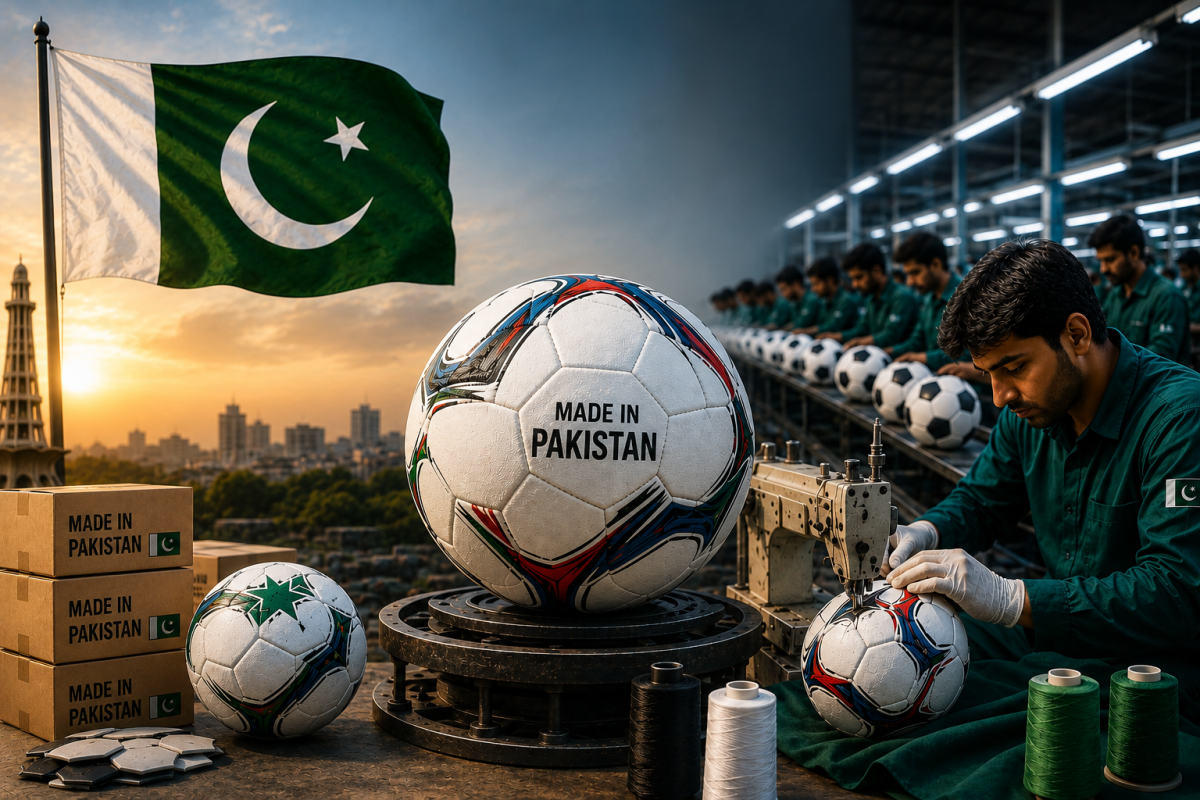
Although Pakistan has rarely qualified for the FIFA World Cup, it has made an extraordinary contribution to the world's most popular sport through football manufacturing. The city of Sialkot has earned a global reputation for producing premium-quality footballs used by leading international brands and major tournaments. Pakistan's football industry combines more than a century of craftsmanship with modern technology, making it one of the most important suppliers in the global sports goods market.
History of Football Manufacturing in Pakistan
Football manufacturing in Pakistan began in Sialkot during the early twentieth century. Skilled artisans initially repaired and hand-stitched leather footballs for British soldiers and gradually developed an export-oriented industry. By the 1970s, Sialkot had become a major supplier to international sports brands. Since then, Pakistan has continued to improve production methods by adopting machine stitching, thermo-bonding technology, and international quality certification.
Sialkot: The Global Hub of Football Production
Sialkot is known as the "Football Manufacturing Capital of the World." The city produces approximately 70% of the world's hand-stitched footballs and exports more than 40 million footballs annually to over 100 countries. Sports goods are among Sialkot's largest export industries, contributing approximately US$600–700 million annually to the city's exports, with footballs alone accounting for US$150–200 million.
The city is home to internationally recognized manufacturers, including Forward Sports, which has become one of Adidas' leading production partners.
Pakistan's Contribution to FIFA World Cup Footballs
Pakistan has played an important role in FIFA World Cup history by manufacturing official match balls for several tournaments. Footballs produced in Sialkot have been used in the 2014 FIFA World Cup (Brazuca), 2018 FIFA World Cup (Telstar 18), 2022 FIFA World Cup (Al Rihla), and the 2026 FIFA World Cup (Trionda). This makes Sialkot one of the few manufacturing centers trusted to produce footballs for consecutive FIFA World Cups.
According to industry reports released in 2026, between July 2025 and April 2026, Sialkot exported 47.988 million footballs valued at approximately US$221.8 million (about PKR 62.3 billion), reflecting strong global demand ahead of the FIFA World Cup 2026.
Quality, Craftsmanship, and Innovation
Pakistan's football industry is renowned for its highly skilled workforce. Traditional hand-stitching techniques continue to be used for premium footballs, while modern factories employ thermo-bonding, computerized quality testing, and automated printing technologies.
Manufacturers comply with FIFA Quality and FIFA Quality Pro standards, ensuring excellent durability, shape retention, water resistance, and flight performance. Continuous investment in research and development has enabled Pakistani companies to remain competitive despite increasing global competition.
Economic Importance of Football Exports
The football manufacturing industry is a major contributor to Pakistan's economy.
Some key figures include:
- Annual football production exceeds 40 million units.
- Football exports generate approximately US$150–221 million annually, depending on global demand.
- Pakistan's sports goods exports are valued at around US$365 million, with footballs contributing more than half of total sports goods exports.
- The industry supports thousands of direct and indirect jobs in manufacturing, logistics, packaging, and exports.
These exports provide valuable foreign exchange earnings and strengthen Pakistan's position in international trade.
Employment and Industrial Development
The football manufacturing sector employs tens of thousands of skilled workers in Sialkot and surrounding areas. It also supports numerous small and medium-sized enterprises involved in leather processing, synthetic materials, printing, packaging, transportation, and export services.
The industry's success has transformed Sialkot into one of Pakistan's most industrialized export cities and has significantly improved employment opportunities and household incomes.
Challenges Facing the Football Manufacturing Industry
Despite its global reputation, Pakistan's football industry faces several challenges:
- Strong competition from China, India, and Vietnam.
- Rising labor and raw material costs.
- Increasing freight and logistics expenses.
- Compliance with international labor, environmental, and sustainability standards.
- Limited investment in global branding, with many firms manufacturing products under foreign labels instead of Pakistani brands.
Addressing these challenges will be essential for maintaining Pakistan's competitive advantage.
Opportunities for Future Growth
The global sports equipment market continues to expand as football's popularity grows across Asia, North America, Africa, and the Middle East. Pakistan can capitalize on these opportunities by:
- Investing in advanced manufacturing technologies.
- Developing internationally recognized Pakistani brands.
- Expanding exports through e-commerce platforms.
- Increasing production of thermo-bonded and smart footballs.
- Strengthening research and innovation partnerships with universities and technology firms.
Growing demand for premium-quality footballs ahead of international tournaments provides further opportunities for export expansion.
Government Support and Policy Measures
To strengthen the football manufacturing industry, the Government of Pakistan should:
- Provide export incentives and tax concessions.
- Improve energy and transport infrastructure.
- Facilitate access to affordable financing.
- Expand vocational training for skilled workers.
- Promote Pakistani brands in international trade exhibitions.
- Encourage research, innovation, and sustainable manufacturing practices.
Such measures would help Pakistan increase its global market share and enhance export competitiveness.
Conclusion
Pakistan's contribution to FIFA football manufacturing extends far beyond supplying sports equipment. Through the expertise of Sialkot's manufacturers and workers, the country has become an indispensable part of world football. The production of official match balls for multiple FIFA World Cups, including the 2026 tournament, demonstrates Pakistan's exceptional manufacturing capabilities and international credibility. With exports approaching 48 million footballs worth over US$221 million during the 2025–26 period and continued investment in innovation and branding, Pakistan is well positioned to strengthen its leadership in the global football manufacturing industry while contributing to national economic growth and employment.

Mr. Obaid Ayub is a skilled professional with specialization in Finance and Operations. Demonstrating a proven track record, He possess a unique combination of skills tailored for the dynamic realms of finance, real estate, and marketing. He has successfully optimized business processes and implemented strategic financial initiatives, showcasing his ability to deliver tangible results. His expertise lies in developing and executing robust financial strategies aligned with organizational objectives, ensuring sustainable growth and profitability. He possess significant expertise in budgeting, forecasting, and financial analysis, contributing to the facilitation of well-informed decision-making.