




Monsoon and Floods in Pakistan: Challenges and Socioeconomic Impacts
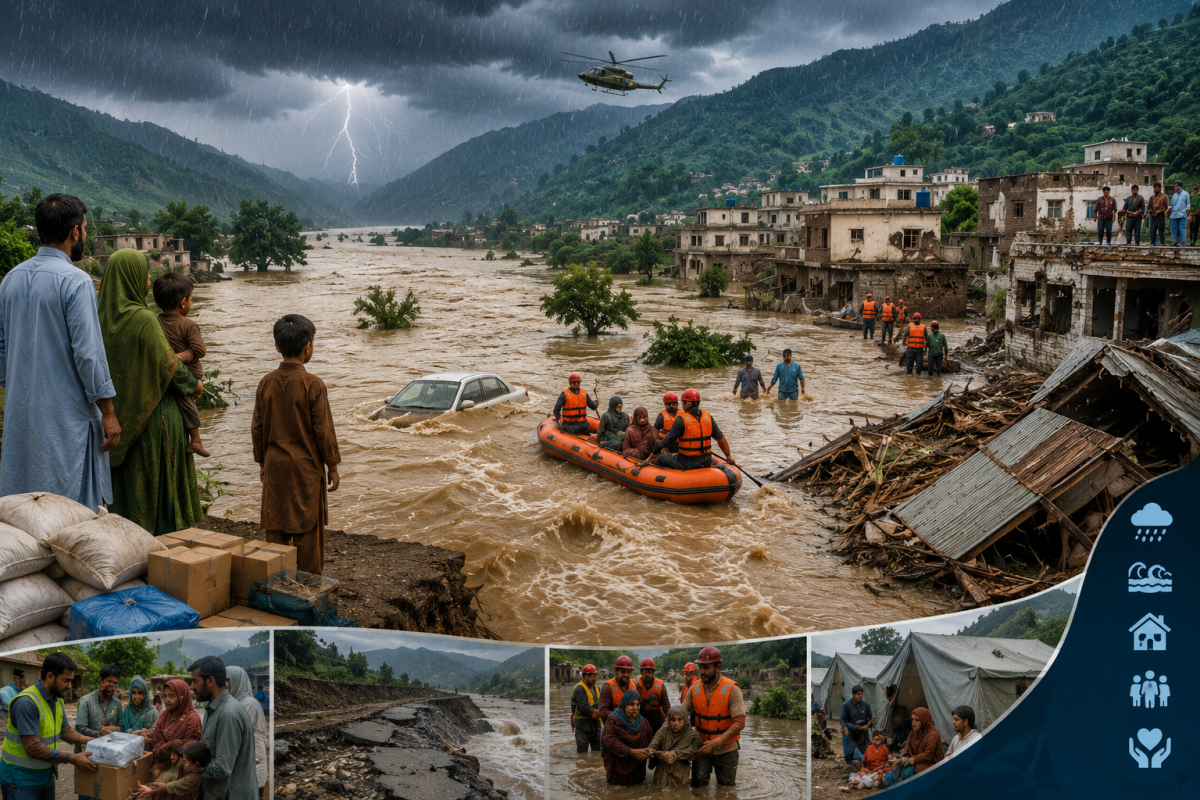
Introduction
Pakistan is one of the countries most vulnerable to climate change and extreme weather events. Its geographical location, diverse climate, extensive river system, and dependence on agriculture make it particularly susceptible to the impacts of monsoon rainfall. Every year, the summer monsoon season, which lasts from July to September, brings approximately 60–70% of the country's annual rainfall. This rainfall is essential for agriculture, drinking water supplies, hydroelectric power generation, and groundwater recharge. However, when rainfall exceeds normal levels, it often results in severe flooding that causes widespread destruction.
Over the past two decades, Pakistan has experienced increasingly frequent and intense monsoon floods due to climate change, glacier melting, rapid urbanization, deforestation, and poor drainage infrastructure. Major flood disasters in 2010, 2022, and 2025 have highlighted the country's growing vulnerability and the urgent need for better disaster management, climate adaptation, and sustainable development. Floods not only cause loss of life but also disrupt economic activities, damage infrastructure, threaten food security, and push millions of people into poverty.
Understanding the Monsoon System
What is a Monsoon?
A monsoon is a seasonal wind system that causes a significant shift in weather patterns, bringing heavy rainfall during the summer months. In South Asia, moist air masses from the Arabian Sea and the Bay of Bengal move inland due to differences in atmospheric pressure. These winds carry large amounts of moisture, resulting in widespread rainfall across Pakistan.
The monsoon generally begins in late June or early July and continues until September. While moderate rainfall is beneficial, unusually intense rainfall over a short period overwhelms rivers, dams, and drainage systems, leading to flash floods, riverine floods, and urban flooding.
The amount and distribution of rainfall vary from year to year depending on atmospheric conditions, ocean temperatures, and global climate patterns such as El Niño and La Niña.
Importance of the Monsoon
The monsoon is often referred to as the lifeline of Pakistan's agriculture because nearly all major crops depend on seasonal rainfall.
The benefits of the monsoon include:
- Providing water for irrigation of crops such as rice, cotton, maize, and sugarcane.
- Recharging rivers, lakes, reservoirs, and groundwater aquifers.
- Supporting hydroelectric power generation through increased river flows.
- Maintaining forests, wetlands, wildlife habitats, and biodiversity.
- Improving soil moisture and supporting livestock farming.
- Reducing water shortages in both urban and rural areas.
Despite these benefits, excessive rainfall can quickly transform the monsoon into a destructive natural disaster, causing billions of dollars in economic losses and affecting millions of people.
Major Causes of Flooding in Pakistan
1. Heavy Monsoon Rainfall
Heavy rainfall during the monsoon season is the primary cause of flooding. Rivers such as the Indus, Chenab, Jhelum, Ravi, and Sutlej, often overflow after prolonged rainfall. In mountainous regions, intense rainfall also causes flash floods that travel rapidly through narrow valleys, leaving little time for evacuation.
Urban areas experience flooding because stormwater drains cannot cope with large volumes of rainfall within a short period.
2. Climate Change
Climate change has significantly increased the frequency and intensity of extreme weather events around the world. Rising global temperatures allow the atmosphere to hold more moisture, resulting in heavier rainfall events.
Pakistan contributes less than one percent of global greenhouse gas emissions but remains among the countries most vulnerable to climate change. Scientists predict that future monsoon rainfall will become even more unpredictable, increasing the risk of floods, droughts, and heatwaves.
3. Glacier Melting
Pakistan possesses one of the world's largest concentrations of glaciers outside the polar regions. Rising temperatures accelerate glacier melting during summer, increasing river flows.
When heavy rainfall coincides with glacier melt, rivers receive enormous volumes of water, increasing the likelihood of riverine flooding. Glacier Lake Outburst Floods (GLOFs) have also become more common in northern Pakistan.
4. Deforestation
Forests play an essential role in reducing flood risk by absorbing rainfall and stabilizing soil.
Unfortunately, illegal logging, land clearing, and urban expansion have significantly reduced forest cover in many regions. As a result, rainwater flows rapidly into rivers instead of being absorbed into the soil, increasing flood intensity and soil erosion.
5. Rapid Urbanization
Pakistan's cities have expanded rapidly over the past few decades. Unfortunately, many urban developments have occurred without proper planning.
Concrete roads, buildings, and parking areas prevent rainwater from infiltrating the ground. Encroachment on natural waterways and poor waste management further block drainage channels, causing severe urban flooding in cities such as Karachi, Lahore, and Rawalpindi.
6. Poor Drainage Infrastructure
Many drainage systems are old, undersized, or poorly maintained. Illegal construction over drainage channels and the accumulation of solid waste reduce their capacity.
Consequently, even moderate rainfall can lead to waterlogging, traffic disruption, property damage, and health hazards in urban areas.
History of Major Floods in Pakistan
The 2010 Floods
The 2010 floods were among the deadliest natural disasters in Pakistan's history. Heavy monsoon rains caused the Indus River and its tributaries to overflow.
The floods affected approximately 20 million people, destroyed more than 1.6 million homes, damaged thousands of schools and health facilities, and devastated agricultural land. Millions of people required emergency humanitarian assistance, while the country's economy suffered severe losses.
The 2022 Floods
The 2022 floods were another catastrophic event. Record-breaking monsoon rainfall submerged nearly one-third of Pakistan.
Thousands of kilometers of roads, bridges, schools, hospitals, and irrigation infrastructure were damaged. Millions of people were displaced, while widespread outbreaks of malaria, dengue fever, diarrhea, and respiratory diseases followed the disaster.
The floods attracted global attention as an example of the growing impacts of climate change on vulnerable developing countries.
The 2025 Floods
The 2025 monsoon season again brought devastating floods to many parts of Pakistan. Thousands of villages were affected, agricultural production declined significantly, and transportation networks were disrupted.
The floods highlighted the need for stronger flood management policies, improved forecasting systems, and climate-resilient infrastructure.
Social and Economic Impacts
Loss of Human Lives
Floods claim lives through drowning, collapsing buildings, electrocution, landslides, and waterborne diseases. Vulnerable groups such as children, elderly people, and persons with disabilities face the highest risks.
Damage to Agriculture
Agriculture contributes significantly to Pakistan's GDP and employs a large proportion of the population.
Floods destroy standing crops, livestock, irrigation canals, farm machinery, and stored grain. Farmers also lose seeds and fertilizers, making recovery difficult and increasing food insecurity.
Infrastructure Damage
Floods damage roads, bridges, airports, railway tracks, electricity transmission lines, telecommunications networks, schools, hospitals, and government buildings.
Repairing this infrastructure requires enormous financial resources and often takes several years.
Health Challenges
Floodwater contaminates drinking water supplies and creates breeding grounds for mosquitoes.
Common health problems after floods include:
- Cholera
- Diarrhea
- Typhoid
- Malaria
- Dengue fever
- Skin infections
- Respiratory diseases
- Mental health disorders
Healthcare systems often become overwhelmed due to increased demand for emergency medical services.
Educational Disruption
Floods interrupt education by damaging school buildings and converting schools into temporary relief camps.
Students may remain out of school for months, affecting learning outcomes and increasing dropout rates, especially among girls.
Impact on Poverty and Employment
Floods destroy businesses, shops, factories, and agricultural livelihoods. Many workers lose their jobs, while poor families struggle to rebuild homes and replace lost assets.
The increase in unemployment and inflation further worsens poverty and food insecurity.
Environmental Consequences
Floods have both immediate and long-term environmental impacts.
These include:
- Soil erosion and loss of fertile agricultural land.
- Riverbank erosion and changes in river courses.
- Destruction of forests and wildlife habitats.
- Contamination of freshwater resources.
- Increased sedimentation in dams and reservoirs.
- Loss of biodiversity.
- Declining water quality.
- Reduced ecosystem resilience.
Environmental degradation further increases future flood risks.
Government and Humanitarian Response
Pakistan's disaster response involves several organizations, including the National Disaster Management Authority (NDMA), Provincial Disaster Management Authorities (PDMAs), the Pakistan Armed Forces, Rescue 1122, local governments, and humanitarian organizations.
Their responsibilities include:
- Search and rescue operations.
- Emergency evacuation.
- Distribution of food and clean drinking water.
- Medical assistance.
- Temporary shelters.
- Rehabilitation and reconstruction.
- Disease surveillance and vaccination campaigns.
International organizations such as the United Nations, UNICEF, WHO, WFP, Red Crescent, and many NGOs also provide technical and financial support during major flood emergencies.
Flood Prevention and Mitigation
Improve Early Warning Systems
Modern weather forecasting, satellite monitoring, flood modeling, and mobile-phone alerts can provide early warnings that save lives.
Strengthen Infrastructure
Pakistan should invest in stronger dams, reservoirs, embankments, bridges, culverts, and flood-resistant buildings.
Afforestation
Large-scale tree plantation programs can reduce soil erosion, improve groundwater recharge, and slow surface runoff.
Urban Planning
Cities should enforce building regulations, protect natural waterways, improve drainage systems, and prevent illegal construction on floodplains.
The Role of Citizens
Citizens also play an important role in reducing flood risks.
They can contribute by:
- Planting trees and protecting forests.
- Keeping drains free of garbage and plastic waste.
- Conserving water resources.
- Following official weather warnings.
- Promoting environmental awareness in schools and communities.
Future Challenges and Recommendations
Pakistan faces increasing risks from climate change, population growth, and environmental degradation. Future flood management should focus on integrated river basin management, improved urban planning, investment in resilient infrastructure, stronger environmental laws, better coordination among institutions, and increased public participation.
International cooperation, climate finance, scientific research, and modern technology will also be essential for reducing future flood risks.
Conclusion
The monsoon remains a cornerstone of Pakistan's agricultural economy and water security. However, the increasing frequency and severity of floods present serious humanitarian, economic, environmental, and developmental challenges. Climate change has intensified rainfall variability, while deforestation, poor urban planning, and inadequate infrastructure have increased the country's vulnerability.
Building a flood-resilient Pakistan requires long-term investment in disaster risk reduction, climate adaptation, environmental conservation, modern infrastructure, scientific research, and public awareness. Through coordinated efforts by government agencies, local communities, the private sector, and international partners, Pakistan can better manage future monsoon seasons, reduce disaster losses, and safeguard sustainable development for future generations.

Ovais Ali Khokhar, as Founder and CEO of House of Elaan & Ovaisco Group, has revolutionized the real estate industry with innovative strategies that blend marketing, investment, legal services, and creativity. His efforts in international relations have led to significant global partnerships. He is deeply invested in youth empowerment, aiming to nurture the next generation of leaders and drive forward a resilient and vibrant future. His work is characterized by a strong commitment to collaboration, innovation, and a vision for a globally connected, sustainable future.