



Urban Smog in Pakistan: Causes, Consequences, and Solutions
Introduction
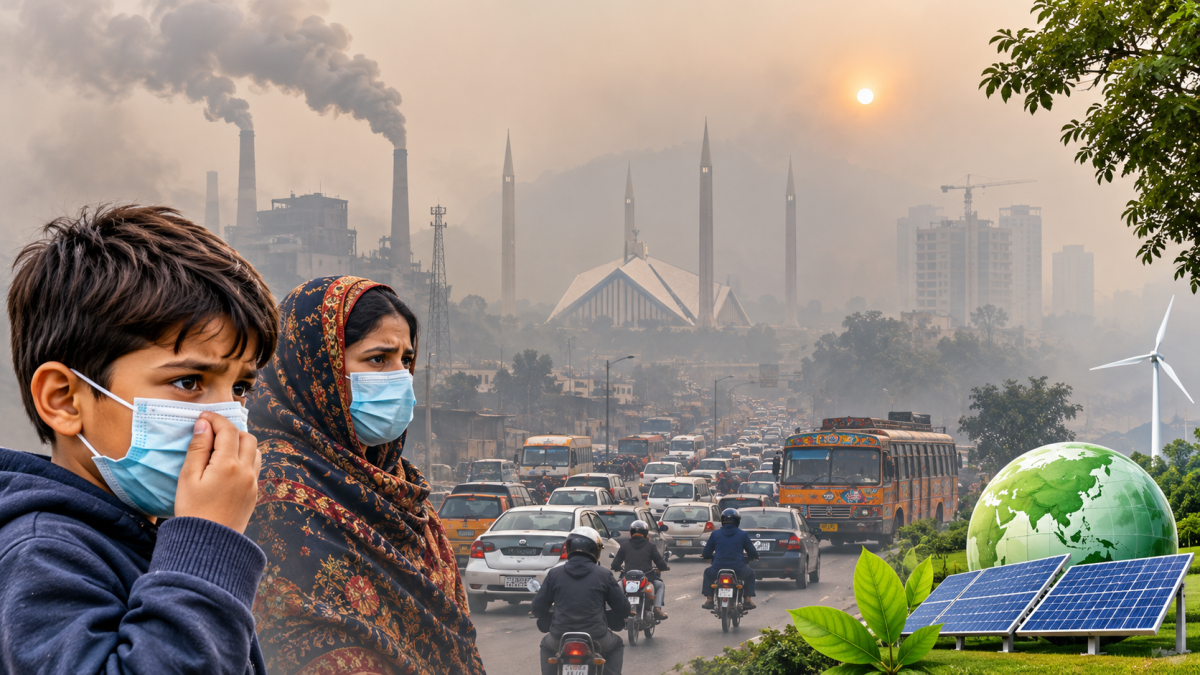
Air pollution has emerged as one of the most serious environmental challenges facing Pakistan, particularly in its major urban centres. In recent years, cities such as Lahore, Faisalabad, Gujranwala, Multan, Karachi, and Peshawar have experienced increasingly severe air pollution, especially during the winter season. One of the most visible manifestations of this pollution is smog, a combination of smoke, dust, and fog that creates a thick layer of polluted air over urban areas. Smog has become a recurring environmental crisis in Pakistan, affecting public health, economic activities, transportation, education, and the overall quality of life.
The problem is particularly alarming in Punjab, where Lahore frequently experiences extremely poor air quality during the winter months. Reduced visibility, breathing difficulties, eye irritation, and respiratory illnesses have become common problems for residents. Schools and businesses have sometimes been forced to close, while hospitals experience increased numbers of patients suffering from respiratory complications.
Although seasonal weather conditions contribute to the formation of smog, human activities are the primary sources of many of the pollutants responsible for it. Industrial emissions, vehicle exhaust, agricultural crop residue burning, construction dust, and the uncontrolled use of fossil fuels have significantly deteriorated air quality. Therefore, addressing smog requires more than temporary restrictions or emergency measures. It demands long-term environmental policies, public awareness, technological improvements, and cooperation between government institutions and citizens.
Causes of Urban Smog in Pakistan
Urban smog in Pakistan is the result of several interconnected environmental and human-related factors.
1. Vehicle Emissions
One of the major contributors to urban air pollution in Pakistan is the increasing number of vehicles on the roads. Rapid urbanization, population growth, and the growing demand for private transportation have resulted in a significant increase in cars, motorcycles, buses, and trucks.
Many vehicles, particularly older models, produce high levels of harmful emissions due to outdated engines, poor maintenance, and inadequate emission-control systems. These emissions contain nitrogen oxides, carbon monoxide, and particulate matter, which contribute to the formation of harmful air pollution.
Traffic congestion further increases pollution because vehicles release emissions while operating at low speeds or remaining stationary. In densely populated cities such as Lahore and Karachi, heavy traffic is therefore a major environmental concern.
2. Industrial Emissions
Industrial development is essential for economic growth, but industries can also become major sources of environmental pollution when proper regulations are not followed.
Factories, brick kilns, power plants, and manufacturing units release smoke and harmful gases into the atmosphere. Some industrial facilities continue to use outdated machinery and low-quality fuels, increasing the amount of pollutants they emit.
In many industrial areas, inadequate monitoring and weak enforcement of environmental standards allow harmful emissions to enter the atmosphere without proper treatment. This pollution becomes particularly dangerous during winter when atmospheric conditions can prevent pollutants from dispersing.
3. Agricultural Crop Residue Burning
Agriculture plays a significant role in Pakistan's economy, particularly in Punjab. However, the burning of crop residues, especially rice straw after harvesting, contributes to seasonal air pollution.
Some farmers burn leftover agricultural material to clear their fields quickly before preparing them for the next crop. This practice releases large quantities of smoke, fine particles, and other pollutants into the atmosphere.
The problem becomes more serious when agricultural burning occurs simultaneously across different areas. Under unfavourable weather conditions, the resulting pollution can travel over long distances and contribute to deteriorating air quality in nearby cities.
4. Construction Activities and Road Dust
Rapid urban development has increased construction activities throughout Pakistan. The construction of roads, buildings, housing societies, and commercial projects generates significant amounts of dust.
Uncovered construction materials, poorly managed construction sites, unpaved roads, and the movement of heavy vehicles contribute to airborne particulate matter.
Dust particles can remain suspended in the atmosphere and negatively affect air quality. In urban areas with heavy traffic and industrial activity, construction dust adds another layer to the existing pollution problem.
5. Burning of Waste and Fossil Fuels
The improper disposal and burning of municipal waste is another important source of urban air pollution. In several areas, waste is openly burned to reduce its volume or dispose of accumulated garbage.
This practice releases toxic smoke and harmful substances into the air. Similarly, the continued dependence on coal, diesel, petrol, and other fossil fuels for electricity generation, industrial production, and transportation increases emissions.
The combination of these activities creates an unhealthy atmosphere, particularly in densely populated urban communities.
6. Weather Conditions and Climate Factors
Weather conditions also influence the intensity of smog. During winter, lower temperatures and certain atmospheric conditions can trap pollutants close to the ground.
Temperature inversion occurs when a layer of warm air sits above cooler air near the surface, limiting the vertical movement of air. As a result, pollutants accumulate near ground level rather than dispersing into the atmosphere.
Low wind speeds, reduced rainfall, and high humidity can further contribute to the persistence of polluted air. Although these weather conditions do not create all the pollution, they can make an existing pollution problem significantly worse.
Consequences of Urban Smog in Pakistan
Smog is not simply an environmental inconvenience; it is a serious threat to human health, economic development, and social well-being.
1. Serious Health Problems
The most dangerous consequence of smog is its impact on human health. Fine particulate matter, particularly PM2.5, can enter deep into the lungs and even reach the bloodstream.
Exposure to polluted air can cause:
- Asthma and respiratory infections.
- Persistent coughing and breathing difficulties.
- Eye, nose, and throat irritation.
- Worsening of existing heart and lung diseases.
- Increased risks of cardiovascular and respiratory complications.
Children, elderly people, women, and individuals with existing health conditions are particularly vulnerable.
Long-term exposure to air pollution is also associated with an increased risk of serious chronic diseases. Consequently, smog places an additional burden on Pakistan's already strained healthcare system.
2. Environmental Degradation
Smog damages the natural environment in several ways. Airborne pollutants can affect plants, reduce photosynthesis, and damage agricultural crops.
Certain pollutants also contribute to acid deposition, which can affect soil quality, water resources, and natural ecosystems.
Furthermore, persistent air pollution reduces visibility and creates an unpleasant environment in urban areas. It also affects biodiversity and the overall ecological balance.
3. Economic Losses
Urban smog creates significant economic challenges for Pakistan. Increased illness leads to higher healthcare expenses and reduced productivity. Workers suffering from respiratory problems may be unable to perform their duties effectively.
Business operations can also be disrupted when air pollution becomes severe. Transport services, construction projects, educational institutions, and outdoor commercial activities may experience interruptions.
In addition, poor air quality can discourage tourism and investment, particularly in cities already struggling with environmental and infrastructural problems.
The economic consequences demonstrate that air pollution is not only an environmental issue but also a barrier to sustainable economic development.
4. Educational Disruptions
Children are among the most vulnerable victims of smog. Severe pollution can force authorities to temporarily close schools or introduce changes to educational schedules.
Such interruptions affect students' learning and academic performance. Even when educational institutions remain open, poor air quality can make outdoor activities unsafe and negatively affect students' concentration and physical well-being.
The disruption is particularly challenging for children from low-income families who may have limited access to indoor learning facilities and digital resources.
5. Transportation and Road Safety
Dense smog significantly reduces visibility, increasing the risk of road accidents. Drivers may find it difficult to identify other vehicles, pedestrians, and road signs.
Motorways and highways may require temporary closures during periods of extremely poor visibility, affecting the movement of passengers and goods.
This situation creates additional transportation costs and disrupts economic activities, particularly the supply of agricultural products and industrial goods.
6. Decline in Quality of Life
Living in a polluted environment affects people's physical and psychological well-being. Residents may avoid outdoor activities, exercise, social gatherings, and recreational activities because of unhealthy air quality.
Children may be unable to play outside, while elderly individuals may struggle to carry out routine activities.
Over time, persistent environmental pollution can reduce public confidence in urban living conditions and increase pressure on families to relocate to less polluted areas.
Solutions to the Smog Crisis in Pakistan
Addressing urban smog requires a comprehensive strategy involving government institutions, businesses, communities, and individuals. Temporary restrictions may provide short-term relief, but sustainable improvements depend on controlling pollution at its source.
1. Improving Public Transportation
The government should invest in affordable, efficient, and environmentally friendly public transportation systems.
Expanding metro bus services, electric buses, and reliable urban transport networks can reduce dependence on private vehicles.
Cities should also develop safe pedestrian pathways and cycling infrastructure to encourage people to adopt alternative modes of transportation.
Regular vehicle emission testing and the removal of highly polluting vehicles from roads are equally important.
2. Controlling Industrial Pollution
Industrial emissions must be monitored through strict environmental regulations. Factories should install appropriate pollution-control equipment, including filters and emission-treatment systems.
Government environmental protection agencies should conduct regular inspections and impose penalties on industries that violate environmental standards.
Industries should also be encouraged to adopt cleaner production technologies and energy-efficient machinery.
3. Promoting Sustainable Agricultural Practices
Farmers should be encouraged to adopt alternatives to crop residue burning.
Modern agricultural machinery, such as residue-management equipment and super seeders, can help farmers manage leftover crop material without burning it.
The government should provide financial assistance, training, and affordable access to such machinery, particularly for small-scale farmers.
Agricultural waste can also be converted into useful products such as compost, animal feed, and bioenergy where technically and economically appropriate.
4. Increasing Green Spaces and Tree Plantation
Urban greenery can contribute to healthier and more sustainable cities. Trees and plants help capture some airborne particles, provide shade, and improve the urban environment.
The government should launch large-scale plantation campaigns and protect existing forests, parks, and green belts.
Urban development plans should include green spaces and ensure that construction projects do not unnecessarily destroy existing vegetation.
However, tree plantation should be considered a supporting measure rather than a replacement for controlling emissions at their sources.
5. Strengthening Environmental Laws
Pakistan needs stronger implementation of environmental laws and policies.
Environmental protection agencies should be provided with adequate resources, trained staff, modern monitoring equipment, and institutional independence.
Air quality monitoring stations should be expanded across major cities so that authorities can identify pollution hotspots and take evidence-based decisions.
Transparent publication of air quality information can also increase public awareness and government accountability.
6. Promoting Renewable Energy
Pakistan should gradually reduce its dependence on highly polluting fossil fuels by expanding solar, wind, and other renewable energy sources.
Solar energy has considerable potential in Pakistan because of the country's favourable sunlight conditions.
Encouraging households, industries, and commercial buildings to adopt solar power can reduce dependence on conventional electricity generation and help lower associated emissions.
Energy efficiency measures should also be promoted to reduce unnecessary fuel consumption.
7. Public Awareness and Community Participation
Public awareness is essential for controlling smog. Citizens should understand how everyday activities contribute to air pollution and how individual behaviour can help reduce emissions.
Schools, universities, media organizations, and community groups should organize environmental awareness campaigns.
People should be encouraged to:
- Use public transportation whenever possible.
- Avoid burning garbage and leaves.
- Maintain their vehicles regularly.
- Reduce unnecessary energy consumption.
- Support tree plantation and environmental protection activities.
- Follow official health and air quality advisories during severe smog episodes.
Collective action can make a meaningful difference when supported by effective government policies.
Role of Government and Citizens
The responsibility for controlling smog cannot rest entirely on the government or individual citizens. Both must work together to achieve meaningful environmental improvements.
The government must develop long-term environmental policies, improve urban planning, regulate industries, invest in clean transportation, and ensure that environmental laws are properly implemented.
At the same time, citizens must adopt environmentally responsible habits and cooperate with pollution-control initiatives.
Educational institutions can play an important role by teaching students about environmental protection and encouraging practical activities such as recycling, plantation, and energy conservation.
Businesses and industries should also recognize their environmental responsibilities and invest in cleaner technologies.
A coordinated approach involving all sections of society is essential for creating cleaner and healthier cities.
Conclusion
Urban smog has become one of the most serious environmental and public health challenges facing Pakistan. Rapid urbanization, increasing vehicle emissions, industrial pollution, agricultural residue burning, construction dust, and the excessive use of fossil fuels have contributed to the deterioration of air quality across major cities.
Its consequences extend far beyond environmental damage. Smog threatens human health, disrupts education, reduces economic productivity, affects transportation, and lowers the overall quality of life.
Although seasonal weather conditions can intensify the problem, the underlying causes are largely connected to human activities and can therefore be addressed through effective policies and responsible behaviour.
Pakistan needs to move beyond temporary emergency measures and adopt a long-term strategy based on sustainable urban planning, clean energy, improved public transportation, modern agricultural practices, industrial regulation, and public awareness.
Protecting the environment is not merely the responsibility of government departments; it is a shared responsibility of every citizen. The future of Pakistan's cities depends on the decisions made today.
A clean and healthy environment is not a luxury but a basic human necessity. If Pakistan takes timely and practical action against urban smog, it can protect public health, strengthen its economy, and provide future generations with a safer and more sustainable environment.

Mr. Obaid Ayub is a skilled professional with specialization in Finance and Operations. Demonstrating a proven track record, He possess a unique combination of skills tailored for the dynamic realms of finance, real estate, and marketing. He has successfully optimized business processes and implemented strategic financial initiatives, showcasing his ability to deliver tangible results. His expertise lies in developing and executing robust financial strategies aligned with organizational objectives, ensuring sustainable growth and profitability. He possess significant expertise in budgeting, forecasting, and financial analysis, contributing to the facilitation of well-informed decision-making.
Obaid Ayub
Director Operations House Of Elaan