



Role and Participation of Women in Pakistan's Economy
1. Introduction
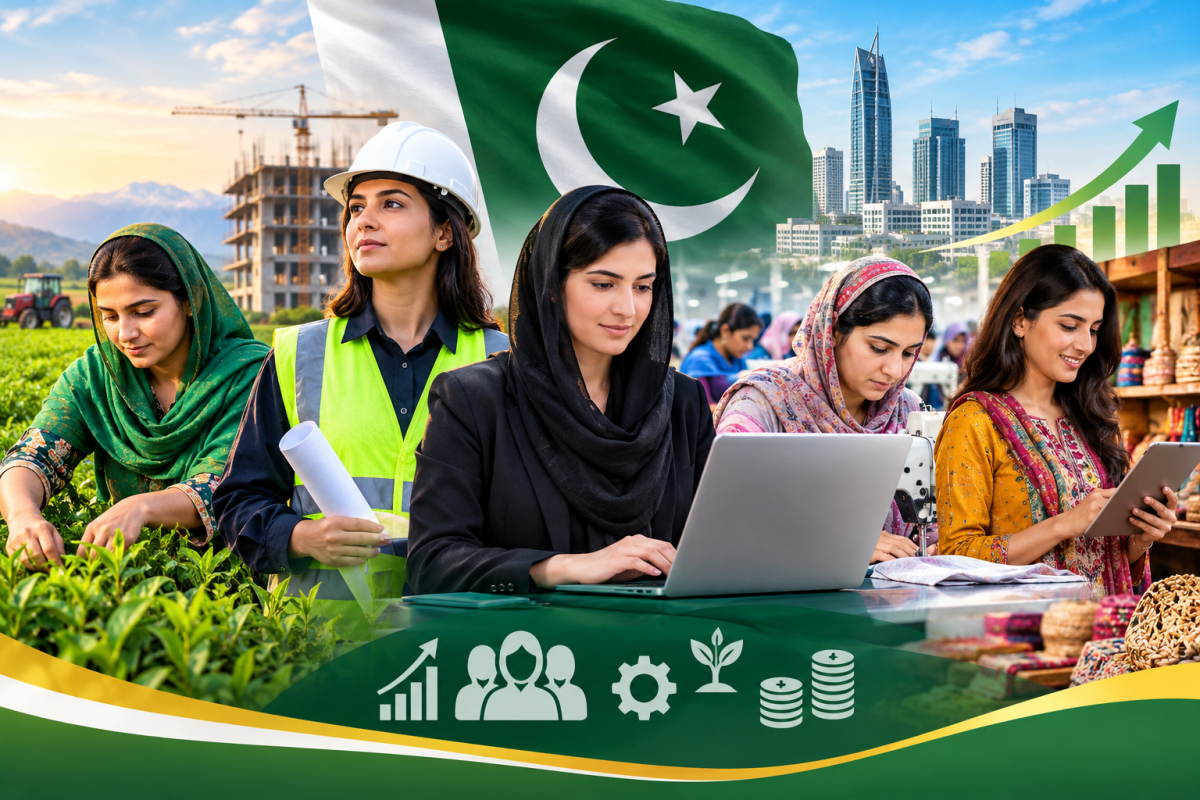
Women play an important role in Pakistan’s economic and social development. They contribute to agriculture, education, healthcare, manufacturing, business, information technology, and other sectors. Their work supports household incomes, creates employment opportunities, reduces poverty, and improves the well-being of society. However, despite their significant contributions, women's participation in the formal economy remains lower than men's because of social, cultural, financial, educational, and institutional barriers.
In Pakistan, many women work in agriculture, home-based industries, family businesses, and informal employment. Others work as teachers, doctors, engineers, government employees, entrepreneurs, and IT professionals. Although educational opportunities and digital technologies have opened new career paths, many women still struggle to obtain suitable employment, access financial resources, and balance professional responsibilities with household duties.
According to the Pakistan Labour Force Survey 2024–25, the female labour force participation rate was 24.4% under the 13th International Conference of Labour Statisticians framework, compared with 21.4% in 2020–21. This indicates progress, but women's participation remains significantly lower than men's. Increasing women's involvement in productive economic activities is therefore essential for Pakistan's sustainable economic growth and national development.
2. Understanding Women's Economic Participation
Women's economic participation refers to their involvement in activities that contribute to the production of goods and services, generate income, create employment, or support economic productivity.
This participation takes several forms.
Formal employment: Women work in government departments, private companies, banks, schools, hospitals, factories, and other registered organizations.
Informal employment: Women earn income through home-based production, domestic work, small-scale trading, handicrafts, stitching, food preparation, and other activities that may lack formal contracts or social protection.
Entrepreneurship: Women establish and manage businesses, including retail shops, online stores, beauty salons, agricultural enterprises, and technology-based ventures.
Agricultural work: Women participate in crop cultivation, livestock care, dairy production, harvesting, food processing, and related activities.
Unpaid care and household work: Women provide childcare, care for older family members, prepare meals, manage households, and perform other essential activities that sustain families and support the wider economy.
A complete understanding of women's contribution must recognize all these forms of work. Economic statistics may not fully capture unpaid domestic work, and some activities conducted for household consumption are treated differently under different labour measurement frameworks.
As a result, women's economic contribution is often greater than what formal employment figures alone suggest.
3. Major Contributions of Women to Pakistan's Economy
2.1 Agriculture
Agriculture is an important sector of Pakistan's economy, and women contribute significantly to agricultural activities, particularly in rural areas. They participate in planting, harvesting, livestock management, dairy production, poultry farming, food processing, and other agricultural tasks.
Women also help maintain household food security and generate income through the sale of agricultural products. However, many rural women work without formal wages or employment contracts and have limited access to agricultural land, modern machinery, credit, and training.
2.2 Education and Healthcare
Women contribute greatly to Pakistan's education and healthcare systems. Female teachers educate children and help improve literacy, while women doctors, nurses, midwives, and healthcare workers provide essential medical services.
Educated and employed women also contribute to human capital development by supporting children's education, improving household health, and encouraging informed decision-making.
Despite these contributions, women may face limited educational opportunities, unequal career advancement, inadequate facilities, and difficulties balancing work and family responsibilities. Scholarships, professional training, safe transportation, and better working conditions can help address these challenges.
2.3 Industry and Manufacturing
Women participate in Pakistan's textile, garment, handicraft, embroidery, food-processing, and other manufacturing industries. Their work supports domestic production, exports, and employment generation.
Home-based workers are particularly important in activities such as stitching and embroidery. However, many receive low wages and lack formal contracts, social protection, and bargaining power.
Improving working conditions, ensuring fair wages, providing technical training, and expanding women's access to industrial employment can increase their contribution to economic growth.
2.4 Services and Information Technology
The services sector provides employment opportunities for women in banking, telecommunications, administration, law, education, healthcare, marketing, and public administration. Professional employment enables women to earn independent incomes and apply their knowledge and skills.
The digital economy has created additional opportunities in freelancing, software development, graphic design, digital marketing, online teaching, virtual assistance, and e-commerce. These activities can be particularly useful for women who face mobility restrictions or require flexible working arrangements.
However, limited internet access, inadequate digital skills, online harassment, and difficulties receiving payments can restrict women's participation. Affordable internet, digital training, secure payment systems, and online safety measures can help women benefit from these opportunities.
2.5 Women Entrepreneurs
Women entrepreneurs contribute to Pakistan's economy by establishing businesses, creating jobs, and introducing new products and services. They operate businesses in clothing, food production, retail, beauty services, education, agriculture, handicrafts, and online commerce.
Entrepreneurship can provide women with financial independence and opportunities to employ others. Nevertheless, many women face difficulties obtaining loans, accessing markets, registering businesses, and receiving professional guidance.
Affordable credit, business training, mentorship, digital marketing, and access to wider markets can help women-owned businesses grow and contribute more effectively to national development.
2.6 Unpaid Domestic and Care Work
Women's economic contribution extends beyond paid employment. Women perform essential household activities, including cooking, cleaning, childcare, caring for older family members, and managing daily household responsibilities.
Although these activities generally do not generate direct wages, they support families and enable other household members to participate in paid employment and education. However, the unequal burden of unpaid care can prevent women from pursuing professional careers, business opportunities, and further education.
Recognizing unpaid care work and promoting a fairer distribution of household responsibilities are important steps towards improving women's economic participation.
3. Challenges Facing Women in Pakistan's Economy
Despite their contributions, women face several obstacles that limit their economic opportunities.
Social and cultural barriers: Traditional expectations may prioritize domestic responsibilities over women's education and employment. These attitudes can restrict mobility and career choices.
Limited education and skills: Some women have inadequate access to schools, vocational training, digital education, and professional development, particularly in disadvantaged rural communities.
Lack of financial resources: Women may struggle to obtain business loans, credit, and other financial services because of limited collateral, low asset ownership, and insufficient access to banking facilities.
Unpaid care responsibilities: Household duties and childcare can prevent women from accepting full-time employment, pursuing training, or advancing in their careers.
Workplace discrimination and harassment: Unsafe workplaces, unequal promotion opportunities, discriminatory recruitment, and harassment can discourage women from entering or remaining in employment.
Transportation and mobility problems: Inadequate public transport and safety concerns can make it difficult for women to reach workplaces, educational institutions, and markets.
Informal employment and low wages: Many women work without formal contracts, paid leave, social protection, or reliable mechanisms for receiving fair wages.
Limited leadership opportunities: Women remain underrepresented in many senior management positions and decision-making roles, limiting their influence over economic policies and workplace practices.
Addressing these barriers requires coordinated efforts by the government, businesses, financial institutions, families, and communities.
4. Importance of Women's Economic Participation
Women's participation in the economy provides several benefits for Pakistan.
First, it increases household incomes and helps reduce poverty. Women's earnings can support food, education, healthcare, housing, and savings, making families more financially secure.
Second, women's employment improves national productivity. When women have access to education and decent jobs, the country can make better use of its human resources, skills, and talent.
Third, women-owned businesses generate employment and promote entrepreneurship. With suitable financial and institutional support, these businesses can expand production, serve new markets, and contribute to economic diversification.
Fourth, women's economic empowerment can improve children's education, family health, and long-term well-being. Financial independence can also strengthen women's participation in household and community decision-making.
Finally, greater formal employment and business registration can expand the tax base and improve access to social protection. Women's participation across agriculture, manufacturing, services, and technology can also help households and communities become more resilient to economic difficulties.
Therefore, women's economic empowerment is not only a matter of gender equality but also an important strategy for national economic development.
5. Government Policies and Measures to Improve Participation
The government has an important responsibility to create conditions in which women can participate safely and productively in economic activities.
First, girls' education and women's vocational training should be strengthened through scholarships, improved school facilities, technical education, and digital skills programmes.
Second, financial institutions should improve women's access to affordable loans, banking services, savings facilities, and business support. Financial literacy programmes can help women manage their income and establish sustainable enterprises.
Third, workplace laws and protections should be implemented effectively to address harassment, discrimination, unequal treatment, and unsafe working conditions.
Fourth, affordable childcare, safe transportation, parental leave, and flexible working arrangements can help women balance employment and family responsibilities.
Fifth, women entrepreneurs should receive business training, mentorship, market access, and opportunities to participate in government procurement and formal supply chains.
Sixth, women working in agriculture and informal employment should have better access to technology, training, fair wages, and appropriate social protection.
Finally, the government should collect reliable gender-disaggregated data to measure women's employment, earnings, working conditions, and access to financial resources. These statistics can help policymakers identify gaps and evaluate the effectiveness of programmes.
Families, employers, educational institutions, and community organizations must also support women's economic participation by encouraging education, sharing domestic responsibilities, and promoting equal opportunities.
6. Future Prospects for Women in Pakistan's Economy
The future of women's economic participation depends on Pakistan's ability to improve education, expand employment opportunities, adopt new technologies, and support entrepreneurship.
Digital platforms and remote work can enable women to access domestic and international markets. Modern agriculture, food processing, manufacturing, healthcare, and professional services also offer opportunities for women to develop new skills and increase their incomes.
However, these opportunities require reliable internet access, appropriate training, affordable finance, safe working conditions, and fair employment practices.
The government and private sector should focus not only on increasing the number of women entering employment but also on improving job quality, wages, security, and career advancement.
Women should have the freedom and resources to pursue professional careers, establish businesses, participate in agriculture, and make independent economic decisions.
7. Conclusion
Women are essential contributors to Pakistan's economy. They support agriculture, industry, education, healthcare, services, entrepreneurship, and the digital economy. Their unpaid domestic and care work also sustains households and supports wider economic activity.
However, women's economic potential remains restricted by limited education, inadequate financial resources, social barriers, unpaid care responsibilities, workplace discrimination, safety concerns, and informal employment.
To overcome these challenges, Pakistan must improve girls' education, expand women's access to finance, strengthen workplace protections, provide affordable childcare, improve transportation, and support women-led businesses. Families and employers must also promote equal opportunities and a fairer distribution of domestic responsibilities.
Women's economic empowerment is essential for sustainable economic growth, poverty reduction, and social progress. When women have equal opportunities to participate in productive activities and benefit from their work, the entire country gains. Pakistan's long-term economic development therefore depends partly on recognizing women's contributions and enabling them to participate fully in the national economy.
Ovais Ali Khokhar, as Founder and CEO of House of Elaan & Ovaisco Group, has revolutionized the real estate industry with innovative strategies that blend marketing, investment, legal services, and creativity. His efforts in international relations have led to significant global partnerships. He is deeply invested in youth empowerment, aiming to nurture the next generation of leaders and drive forward a resilient and vibrant future. His work is characterized by a strong commitment to collaboration, innovation, and a vision for a globally connected, sustainable future.
Ovais Ali Khokhar
President Elaan Research Center